
If you’ve been feeling tired, foggy, and unlike yourself, it might not be age. It might be what’s (not) happening while you sleep.
There’s a quiet epidemic affecting men over 30 and most doctors aren’t talking about it during your annual checkup. It doesn’t show up dramatically. It creeps in slowly: a little more fatigue, a little less drive, workouts that feel harder for less reward. You chalk it up to getting older.
But here’s what the research actually shows: one of the most powerful drivers of declining testosterone isn’t age. It’s sleep. Specifically, the kind of fragmented, insufficient, low-quality sleep that has become almost universal among modern men.

Why Your Body Builds Testosterone While You Sleep
Testosterone production doesn’t run on a flat schedule throughout the day. It’s tightly synchronized with your sleep architecture, particularly deep slow-wave sleep and the early cycles of REM sleep. The pituitary gland releases pulses of luteinizing hormone (LH) during sleep, which signals the testes to produce testosterone. The bulk of that production occurs in the first few hours of sleep and peaks just before waking.
When you cut sleep short, fragment it with poor quality, or chronically under-recover, you’re not just tired. You’re actively interrupting that hormonal signaling cycle at its most critical window.

A 2011 study published in the Journal of the American Medical Association found that men who slept five hours a night for just one week experienced a 10 to 15% drop in daytime testosterone levels. That’s the equivalent hormonal decline you’d expect from aging 10 to 15 years, compressed into seven nights.
It’s Not Just Testosterone. It’s the Whole System.
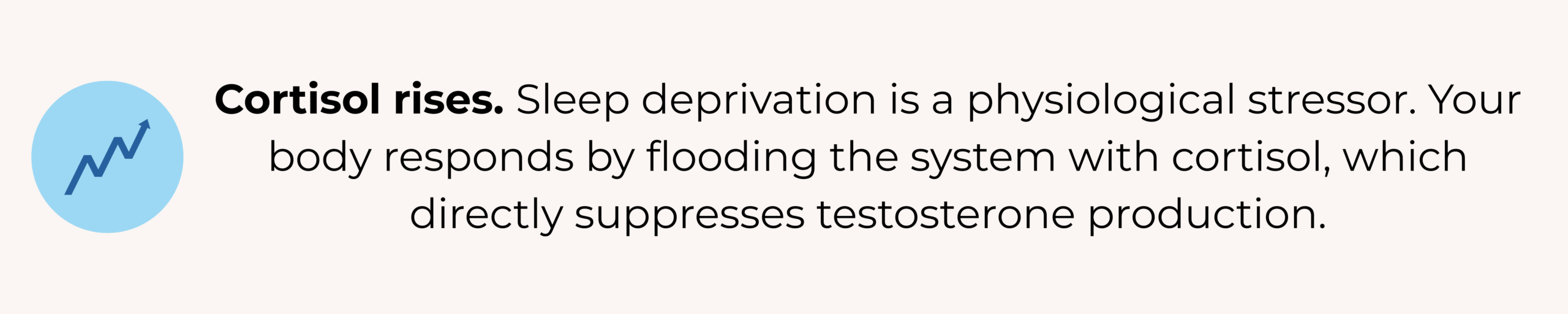
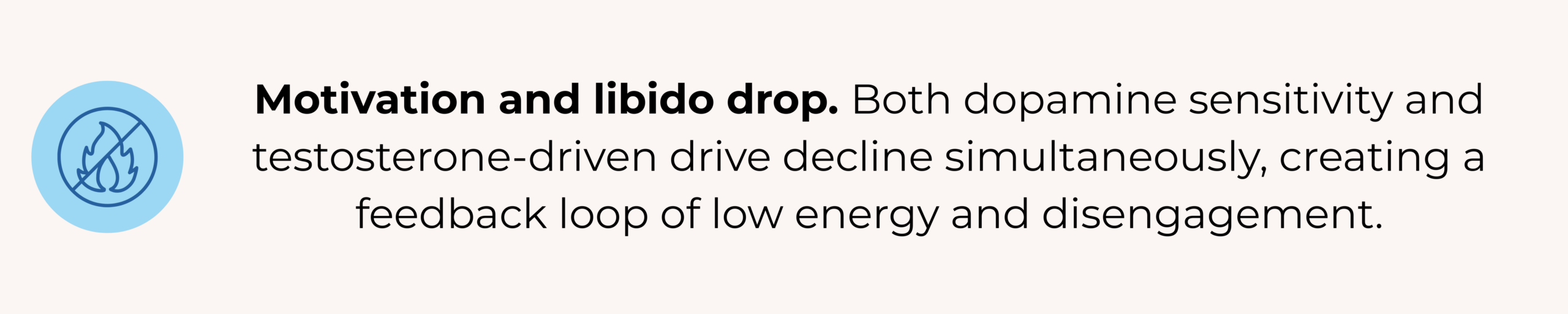
Low testosterone from poor sleep doesn’t operate in isolation. It triggers a cascade of connected hormonal disruptions that compound each other:


The result is a man who feels fundamentally different from how he used to and assumes it’s simply the inevitable cost of getting older. For many, it isn’t.
Why So Many Men Miss This Connection
The symptoms of sleep-driven testosterone decline are insidious precisely because they’re gradual and culturally expected. Fatigue? “I’m busy.” Low motivation? “I’m stressed.” Harder to build muscle? “I’m in my 30s.” Brain fog? “Just a lot on my plate.”
Men are socialized to push through these signals rather than investigate them. And when they finally do seek help, the conversation rarely starts with sleep quality. It starts with labs, supplements, and sometimes hormone replacement, without ever addressing the upstream cause.
The irony is that optimizing sleep is the most evidence-based, zero-cost intervention for testosterone that exists. Before spending money on anything else, it deserves serious attention.
Five Sleep Habits That Protect Your Hormones
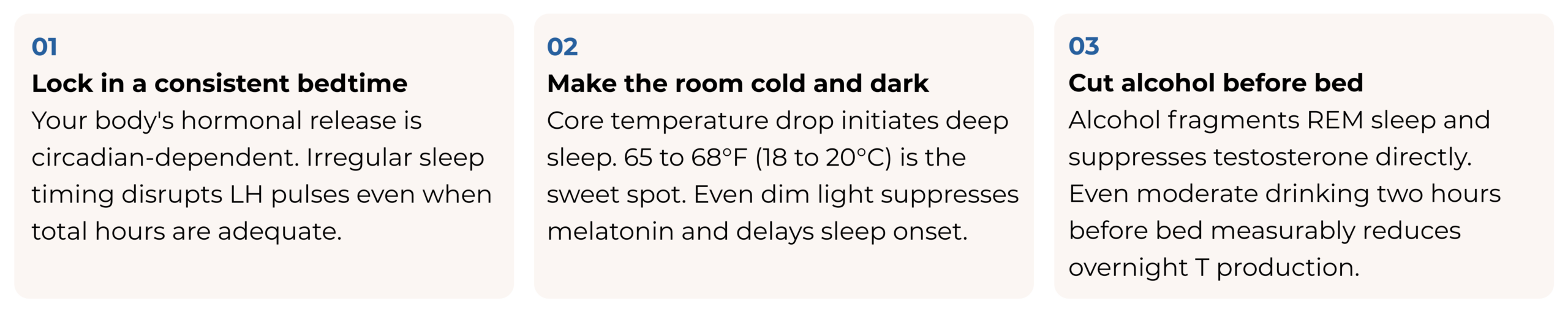
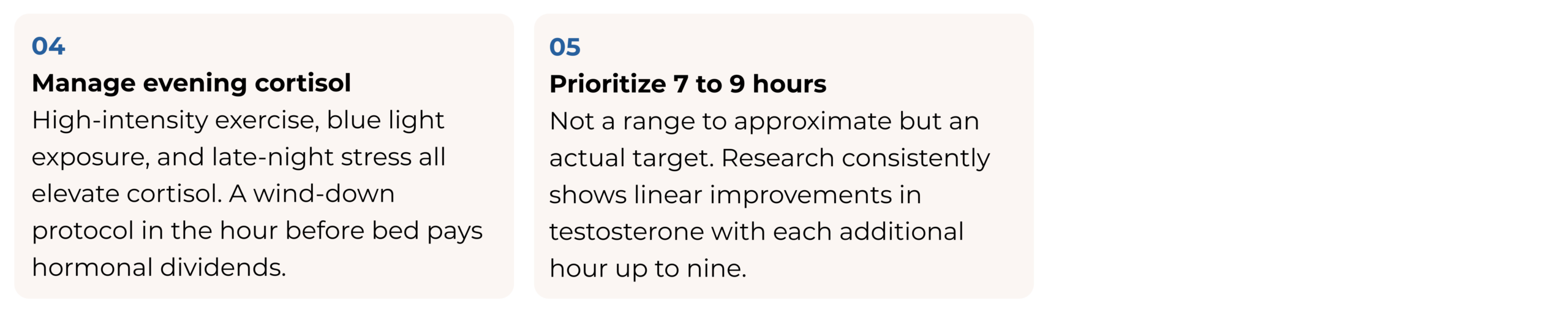
None of these require supplements, prescriptions, or significant lifestyle upheaval. They require treating sleep as the biological priority it actually is, not a luxury squeezed into whatever time remains after everything else.
Don’t Outsource the Solution Before You Fix the Foundation
If you’re a man over 30 who’s been feeling off, tired, unmotivated, softer in the gym, less sharp mentally, there’s a real possibility that what you’re experiencing is hormone-related. And there’s a real possibility the primary driver is something you’ve been systematically ignoring every night.
Spend four weeks taking your sleep seriously. Track it. Protect it. Optimize it. The results may surprise you more than anything else you try.
Still feeling sluggish? We would love to talk with you! Request a complementary consultation to see if bioidentical hormone replacement therapy could be right for you.